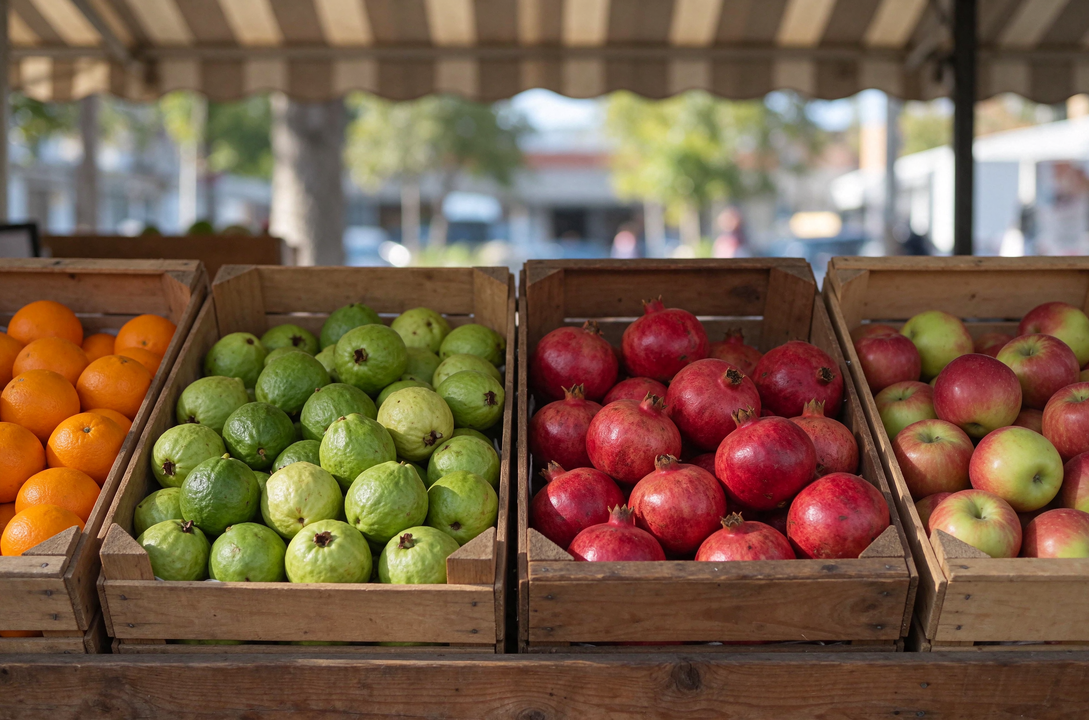
Winter brings a fresh set of fruits to Indian markets. Oranges, guava, amla, and pomegranate are easy to find and full of taste. Winter seasonal fruits can give you vitamins, minerals, fibre, and antioxidants, which are plant compounds that help protect your cells.
Eating a variety of fruits is a simple way to add nutrition to your meals. In this article, you will learn which fruits to choose, what they offer, and how to enjoy them.
Why Should You Eat Seasonal Fruits During Winter?
Fruits give your body important nutrients. Each fruit has a different mix of vitamins and minerals, so variety matters. Fruits also contain fibre, which supports digestion.
Fresh, local fruits are often tasty and good value when they are in season. A mix of colourful fruits also helps make your diet more balanced. Indian dietary guidance from ICMR-NIN encourages eating fruit as part of daily meals.
This does not mean seasonal fruits are always richer in nutrients than stored or imported ones. The main goal is to eat a good variety.
Best Winter Seasonal Fruits and Their Health Benefits
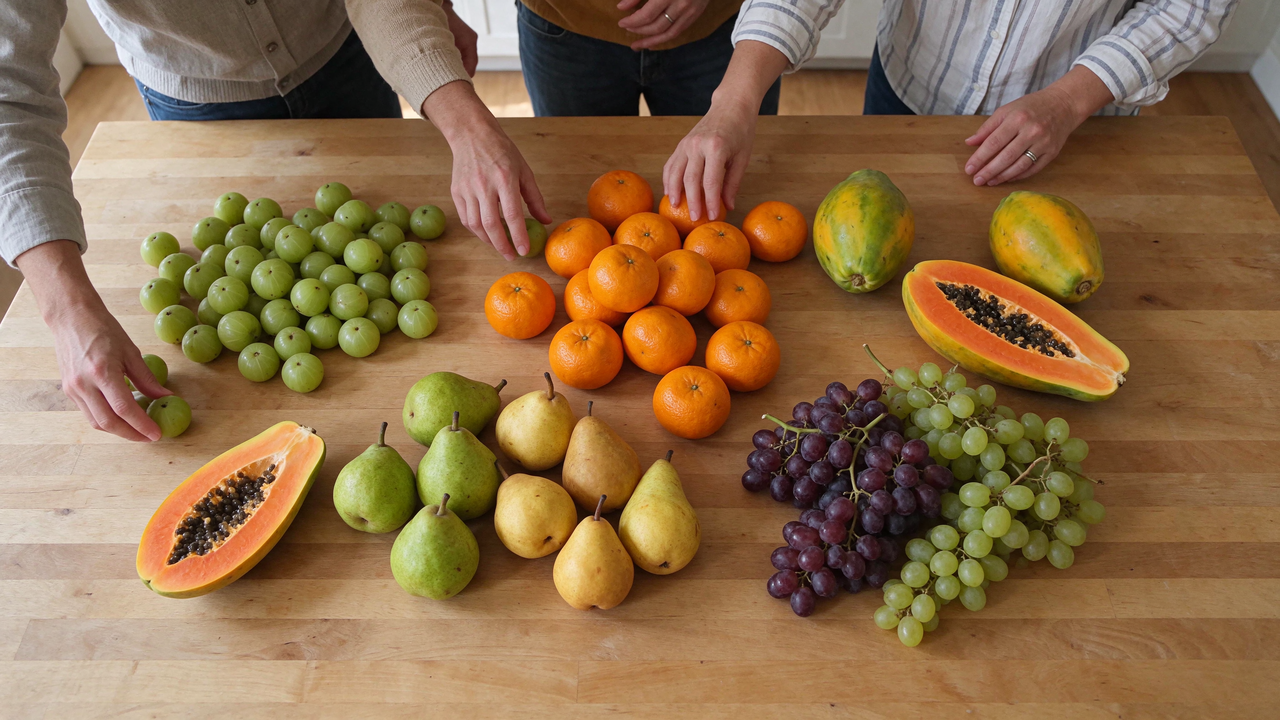
Here are healthy winter fruits that are commonly found in India. Availability can vary by region and local growing season, and some fruits are sold all year.
- They are a good source of vitamin C, fibre, and antioxidants.
- It offers vitamin C and fibre, which support normal digestion.
- Amla (Indian gooseberry). It is known for vitamin C and plant compounds. Eat it fresh or add it to meals.
- It provides fibre and antioxidants. Enjoy it as a snack or sprinkle seeds on salads.
- They give you fibre and plant compounds. Wash them and eat them with the skin.
- They provide vitamin C and water. Add them to breakfast or fruit salad.
- Kinnow and sweet lime (mosambi). These citrus fruits provide vitamin C and water.
- It offers vitamin C, fibre, and vitamin A-related compounds. It is easy to eat as a snack.
- They give you fibre and water, which support healthy digestion.
- They contain water, natural sugars, and some fibre. Enjoy them in sensible portions.
7 Benefits of Eating Winter Seasonal Fruits
- Important vitamins and minerals. Fruits supply nutrients such as vitamin C, potassium, and folate.
- Normal immune function. Vitamin C plays a role in how the immune system works, according to the NIH Office of Dietary Supplements. Fruits do not guarantee protection from colds or flu. Harvard Health notes that research has largely debunked the idea that vitamin C prevents colds.
- Healthy digestion. Fibre helps keep bowel movements regular.
- Many fruits contain a lot of water.
- Plant compounds help protect cells from damage.
- Healthy skin. Vitamin C is needed to make collagen, a protein found in skin.
- Easier healthy snacking. A whole fruit can replace many processed snacks.
How to Include Winter Seasonal Fruits in Your Daily Diet

Small habits make it easy:
- Eat one whole fruit with breakfast.
- Add chopped fruit to plain yogurt or oats.
- Make a quick fruit salad.
- Carry an apple, guava, or orange as a snack.
- Add pomegranate seeds to salads.
- Choose fruit instead of sugary desserts.
- Pick whole fruits more often than juice.
Packing school snacks? Our guide to winter nutrition for kids has more ideas.
Are Winter Seasonal Fruits Suitable for Everyone?
Most people can enjoy fruit as part of a balanced diet. Still, needs differ.
Who Should Take Extra Care?
- People with diabetes should watch portion sizes and follow their dietary advice.
- People with chronic kidney disease may need advice about potassium.
- People with food allergies should avoid fruits that cause a reaction.
- People with sensitive digestion may need to adjust fruit choices and portions.
If you have a health condition, ask your doctor or a registered dietitian what suits you.
Tips for Choosing and Eating Fresh Winter Fruits

- Pick fruits without mould or serious damage.
- Wash fruits under clean running water before eating.
- Store each fruit the way it needs to be stored.
- Go easy on sugar, syrup, or sweetened cream.
- Eat different fruits instead of relying on one.
- Choose whole fruit over strained juice to keep the fibre.
Frequently Asked Questions
Which fruits are best to eat during winter?
Oranges, guava, amla, apples, pomegranate, papaya, pears, and kinnow are popular choices in India. Eat what is fresh and available near you.
What are the benefits of eating seasonal fruits in winter?
They provide vitamins, minerals, fibre, water, and antioxidants. They also make healthy snacking easier.
Are oranges and guava good winter fruits?
Yes. Both provide vitamin C and fibre and are easy to find in winter.
Which winter fruits are rich in vitamin C?
Oranges, kinnow, sweet lime, guava, amla, strawberries, and papaya are good sources.
Can eating fruits during winter support immunity?
Fruits give your body nutrients that the immune system needs. They cannot promise protection from illness, so keep up other healthy habits too.
Is it better to eat whole fruits or drink fruit juice?
Whole fruit is usually better because it keeps its fibre. The NHS says juice and smoothies count as one portion at most and should be limited to 150 ml a day.
How many fruits should I eat daily during winter?
ICMR-NIN’s 2024 guidelines suggest about 100 grams of fruit a day within a 2,000-calorie diet. The NHS advises at least five portions of fruit and vegetables a day, with 80 grams as one portion. Your needs may differ, so ask a healthcare professional if unsure.
Conclusion
Winter seasonal fruits are a tasty and useful part of a balanced diet. Oranges, guava, amla, apples, and pomegranate give you vitamins, fibre, and water. Choose a variety of local fruits and eat whole fruit more often than juice.