The 988 Suicide & Crisis Lifeline is available to anyone in the United States who is having thoughts of suicide or mental health crisis.
Following the trial of the Massachusetts nurse charged with killing her three children in what her defence alleges was a “severe episode of postpartum psychosis,” maternal mental health has become part of the national discussion. The subject has been much talked about lately after actress Hayden Panettiere admitted to having postpartum depression.
A problem far more common than people realise
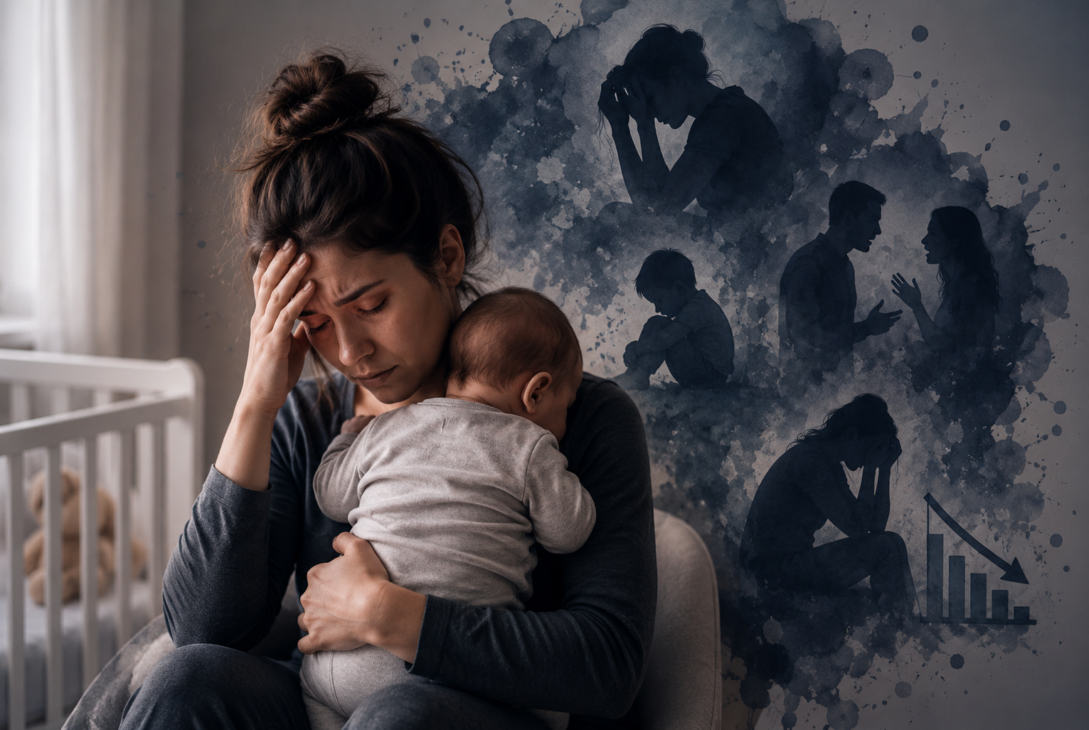
A Duke University professor of Psychiatry says that prenatal or postpartum mental health problems are more prevalent than more widely recognised conditions, such as gestational diabetes. An estimated one in every five women in the U.S. suffer from depression, anxiety and psychosis during pregnancy and in the first year after giving birth. Many of these cases are hidden and untreated due to shame.
The condition in the Clancy case is postpartum psychosis, which is much less common than depression or anxiety. They estimate that 1-2 cases of this type are seen for every 1,000 births. It is a psychiatric emergency: disorganised thinking, hallucinations, paranoia, a break from reality and not the “baby blues” or “postpartum depression”, manifested as persistent sadness, decreased interest in the baby, and poor ability to manage daily activities. The vast majority of mothers who have postpartum psychosis do not cause harm to their children. However, the disorder robs its victim of his or her perception of reality, and this can be dangerous if not treated.
Bridget María Chesterton, a mother in New York, lost her memory and sense of place weeks after her daughter’s premature birth. At one point she didn’t recognise that she’d given birth at all. She was hospitalised twice. Antipsychotic medication and nearly two months of round-the-clock family support got her through it. She has since spoken publicly about the experience, pushing back on claims made by some after the Clancy case that postpartum psychosis isn’t a real illness.
Why so many mothers fall through the cracks
Adrienne Griffen, who now heads the Maternal Mental Health Leadership Alliance, sought treatment for postpartum depression in 2001 and was met with suspicion instead of help. A doctor brought up the Andrea Yates case rather than offering her care. It took her six months to get real treatment.
A Boston Globe opinion piece on the Clancy case traces the problem further back. For most of human history, new mothers had structured community support built in. Mayan tradition calls for 20 days of rest. Japanese custom calls for about three weeks. In parts of Europe, female relatives handled meals and chores for weeks after birth. Much of that disappeared once childbirth moved from homes to hospitals after World War II, leaving mothers to manage alone in the nuclear-family model right when they need the most help. That isolation got worse for parents who gave birth during COVID, when hospital visitor restrictions cut many new mothers off from family.
Other pressures stack on top. Paid parental leave is limited. Recovery from a C-section, which accounts for about a third of U.S. births, takes weeks. There’s pressure to get back to work and back to pre-pregnancy routines quickly, all while hormones are still in flux. A postpartum-support industry has grown around this gap: night nurses, doulas, lactation consultants- but it’s out of reach for families who can’t pay out of pocket.
What can actually help
Screening for maternal mental health during pregnancy and after birth, the way gestational diabetes is screened for, could catch problems earlier. Treatment for postpartum anxiety and depression works when people can get it: cognitive behavioural therapy, support groups, medications such as SSRIs. For postpartum psychosis, fast psychiatric treatment paired with hands-on family support makes a real difference in recovery.
But mothers who’ve been through it and the researchers who study it keep coming back to something simpler: presence. Not a check-in text. Someone actually showing up, sitting with a new mother, taking a shift with the baby. That kind of support remains one of the strongest protective factors in the weeks after childbirth.