That scratchy throat or wave of unexplained tiredness this August? Might not be a summer cold. COVID is spreading again across the U.S. — the third summer in a row this has happened.
Cases Are Rising Nearly Everywhere
The CDC’s epidemic modelling has infections growing or likely growing in nearly every state as of mid-to-late August 2026. Some estimates say all 50 states, others put it at 47, depending on exactly when you check. Either way, no state is declining. Two months ago it was the opposite: infections were falling almost everywhere, rising in only a handful of places.
Test positivity tells the same story. For the week ending August 8, the share of positive COVID tests crossed 3% nationally for the first time since March, and it rose in every single state. It’s August, and somehow it’s already “COVID season” — before flu and RSV have even started their usual autumn climb.
Where the Virus Is Spreading Fastest
The South and West are seeing the sharpest increases; the Northeast and Midwest are climbing too, just more slowly. Wastewater data backs this up — several Southern and Western states are already above last winter’s peak viral concentrations.
Stanford’s WastewaterSCAN program has tracked sewage levels climbing steadily since late June, with August roughly double where July was. That’s a much steeper curve than the official case counts or test-positivity numbers suggest, which says a lot about how much COVID is circulating without ever showing up in a doctor’s office.
A Milder, More Predictable Pattern
Here’s the part that matters most: this doesn’t look like 2020, or even 2022. Hospitalisations and deaths remain low, continuing a trend where each wave has been gentler than the last. Doctors point to accumulated immunity — most people now carry some mix of protection from past infections and vaccines, and that combination blunts severity even when it doesn’t stop transmission.
COVID has settled into something like the flu, and RSV doesn’t: two peaks a year, one in summer and one in winter. Why summer? A couple of theories. One is behavioural — brutal heat pushes people indoors into air conditioning, which behaves a lot like winter’s poor ventilation. The other is immunological: COVID mutates in smaller, more frequent steps than flu does, and whatever protection you build up seems to fade faster than immunity to most other respiratory bugs. That leaves a gap wide enough for a second infection before winter even arrives.
Who’s Most at Risk
Most healthy adults are fine. The people who need to pay closer attention are those over 65, infants, anyone immunocompromised or managing a chronic condition, and people who’ve never been vaccinated. Symptoms from this summer’s variants track closely with prior Omicron strains — sore throat, cough, fever, fatigue, congestion — usually showing up two to fourteen days after exposure.
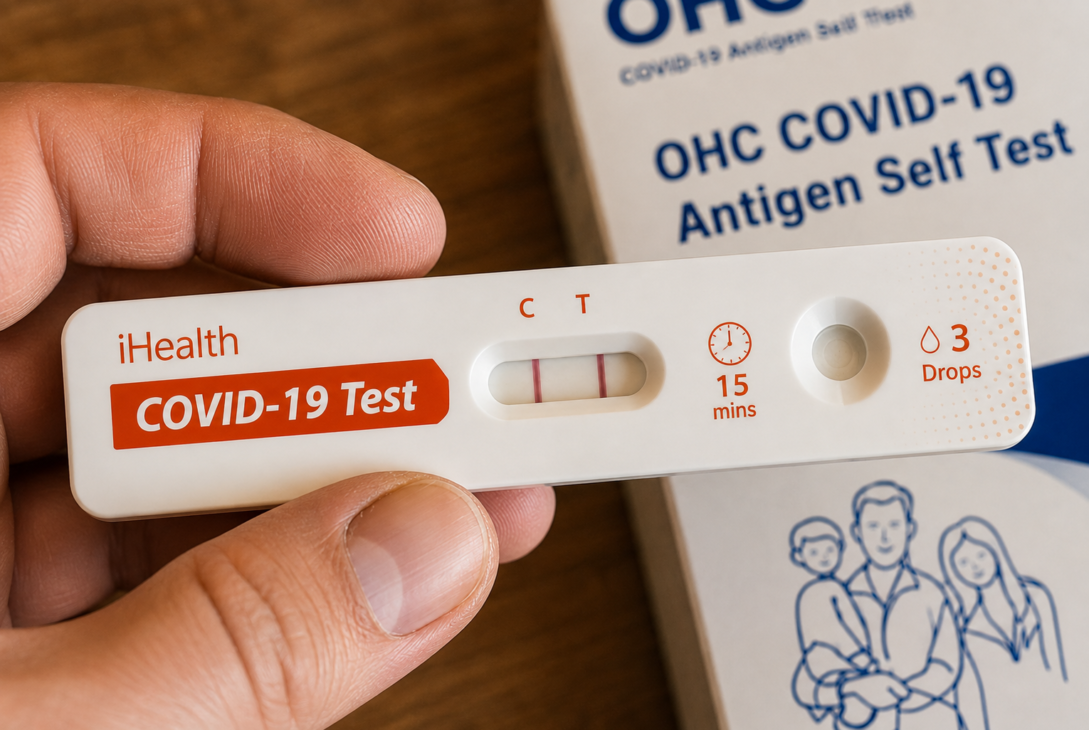
If symptoms hit, test. COVID is hard to tell apart from other respiratory illnesses without one. A negative at-home test with symptoms that don’t go away? Test again after 48 hours, per CDC guidance. Antivirals still work best when started early. And if you test positive, stay home until symptoms ease and you’ve been fever-free for 24 hours without medication.
What Comes Next
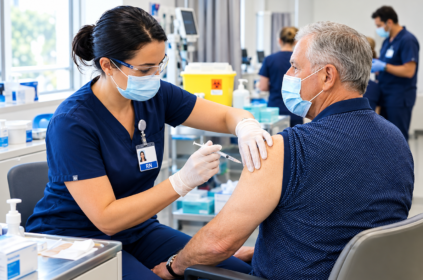
Forecasters expect this wave to peak sometime in early-to-mid September, though that could shift. Back-to-school season means kids and staff crowded into indoor spaces again, and travel is still going strong — so case counts will likely keep rising for a while yet. A fall vaccine targeting the current strains is expected before the traditional respiratory season kicks in.
None of this is really cause for alarm. It’s just worth knowing. Test if you’re symptomatic, keep vaccinations current if that applies to you, and be a little more careful around anyone in your life who’s vulnerable. That’s still the whole playbook — even in a wave that’s widespread but, so far, nowhere near as rough as the early pandemic years.