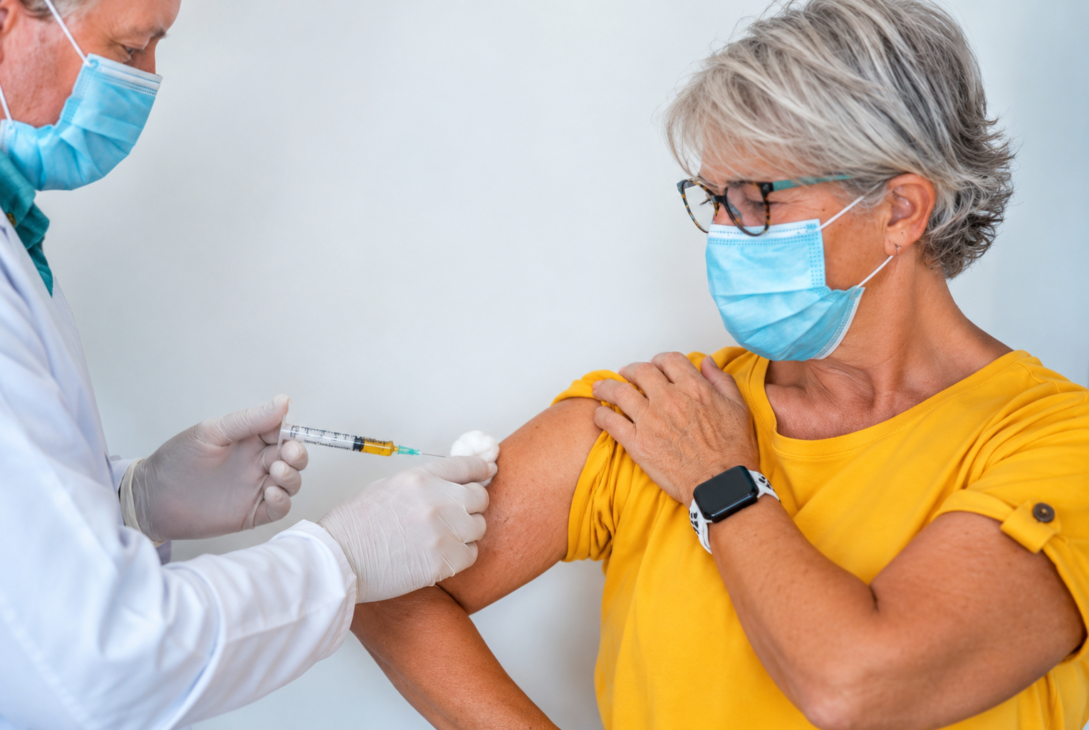
A vaccine for a skin rash might also be protecting people’s hearts. Oxford researchers found that older adults who got Shingrix, the newer shingles vaccine, had lower rates of cardiovascular disease than people who got the older vaccine, Zostavax. The study, published in Nature Medicine, follows the same team’s earlier finding that Shingrix is tied to lower dementia risk too. Arguably that’s the more interesting story here. Two organ systems, one vaccine, and nobody’s totally sure why.
What They Actually Did
Shingles comes from the same virus as chickenpox, reactivating later in life, usually in older adults or people with weaker immune systems. The painful, itchy skin eruption you’ve seen your relative suffer. There have been two vaccines: Zostavax (live virus, which was used until October 2017) and a newer recombinant vaccine (Shingrix, which took its place that October).
It is difficult to study the effects of vaccines because healthy persons are more likely to be vaccinated. They go to doctors regularly, follow guidelines and tend to generally care for themselves better. Any signal is clouded when compared to those who are not vaccinated. The Oxford team did something smarter: They compared people who received Zostavax in the six months prior to the 2017 switch with people who were vaccinated with Shingrix in the six months following the switch. Both groups had already decided to get vaccinated, which cancels out a lot of the bias that’s plagued earlier studies on this.
Using health records from about 72,000 people aged 60 and up in the TriNetX database, they tracked cardiovascular outcomes for seven years. The overall cardiovascular burden of the Shingrix group (combined coronary heart disease, heart failure and stroke) was 9 per cent lower. Cardiovascular: CHD (coronary heart disease) decreased by 10%, heart failure (HF) decreased by 12%, AF (atrial fibrillation) decreased by 7%. The risk of stroke in men was reduced by 12%, and this was not statistically significant for women. In actual numbers, the 9% relative decrease is equivalent to approximately 1 fewer cardiovascular event out of every 100 individuals over seven years.
Small Per Person, Big at Scale
That 1% absolute reduction won’t change any individual’s decision to get vaccinated. But shingles vaccines go into millions of arms every year, so even a small effect adds up. Mark Russell, a rheumatologist at King’s College London who wasn’t involved in the study, made this point in a statement: the population math is where this gets interesting, not the individual risk calculation.
Why Would a Shingles Vaccine Touch the Heart?
Nobody knows for sure, and the researchers are upfront about that. Two competing explanations are floating around.
The first is straightforward. Shingles infections themselves raise cardiovascular risk, so a vaccine that’s simply better at preventing shingles would indirectly protect the heart too.
The second is more specific, and more interesting. Shingrix contains an immune-boosting agent (AS01) that is not found in Zostavax. According to the theory, the immune system becomes trained to respond to AS01 through a change in how the cells behave, which could help to reduce the chronic inflammation associated with atherosclerosis, the fatty buildup in the artery walls in the heart and brain that can lead to heart attacks and strokes. What makes this theory more likely: previous studies did not reveal any cardiovascular protection for Zostavax, and using the same natural-experiment technique with this vaccine gave no positive answers. That points toward the adjuvant, not just better shingles prevention, being the actual driver.
Study co-author Fabiana Corsi-Zuelli said the recombinant vaccine may be inducing changes in immune cells that ripple outward into the cardiovascular system. Co-author Betty Raman went further, suggesting those immune changes could activate cytokines that promote plaque buildup in arteries. It’s a fairly direct line from the immune system to heart attack risk, if the theory holds.
The Catch
This is still an observational study. The natural-experiment design is clever and knocks out a lot of the usual confounders, but it can’t prove Shingrix causes the drop in heart disease. That requires a randomised trial, and one is already running: DAN ZOSTER, out of Denmark, following about 162,000 people, with first results expected in 2027.
Kaleen Hayes, a pharmacoepidemiologist at Brown who wasn’t involved in this study, called it the natural next question after the dementia findings. She noted the evidence on Shingrix and cardiovascular outcomes had been mixed before this.
Even the study’s own authors are careful not to get ahead of themselves. Co-author Maxime Taquet said as much at a media briefing: this is observational, they want to see the trial data, and people should get the vaccine for shingles protection first. Any heart or brain benefit is a bonus, not the reason to roll up your sleeve. If the trial results hold up, though, the number could be real: hundreds of thousands of cardiovascular events prevented in the U.S. alone, from a vaccine originally approved for something else entirely.