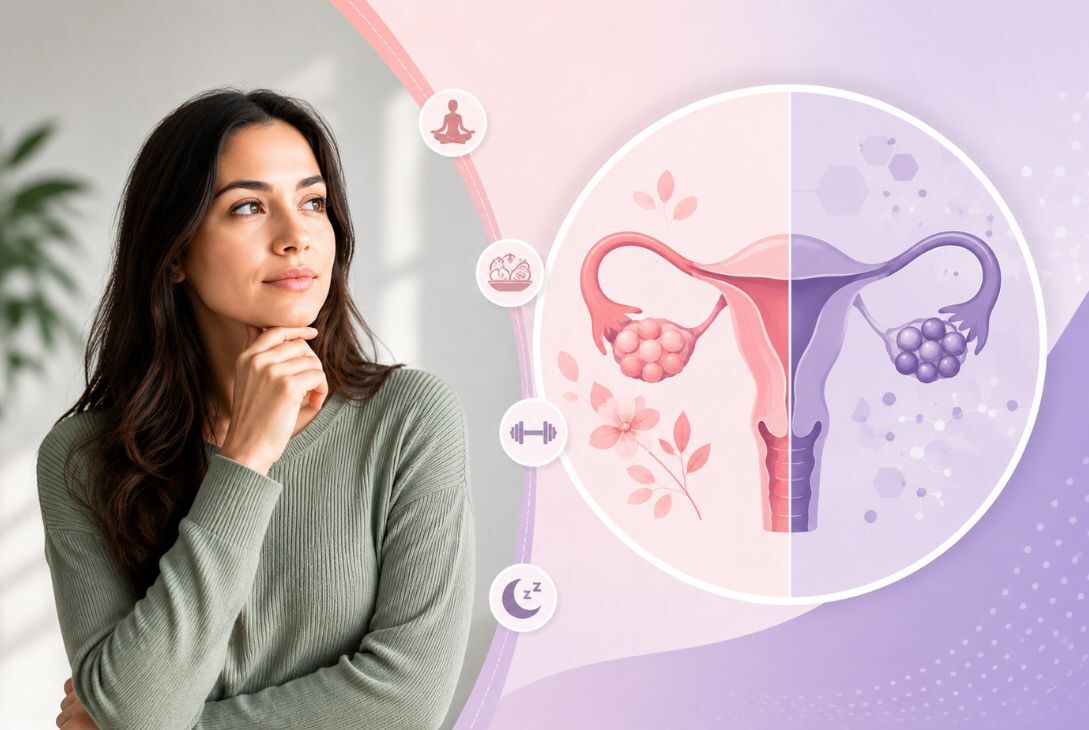
For 90 years, millions of women worldwide have been diagnosed with Polycystic Ovary Syndrome or PCOS. The name PCOS has been around since the 1930s.
At that time, surgeons saw what they thought were cysts on a patients ovaries.
They named the condition based on what they saw
- It seemed reasonable then.
- Doctors now know that the name PCOS got almost everything wrong.
- The name Polycystic Ovary Syndrome does not really describe the condition accurately.
- Millions of women are affected by PCOS every year.
- The condition PCOS is still not well understood.
- Doctors and researchers are still studying PCOS.
- They want to find ways to diagnose and treat PCOS.
On May 12, 2026, health experts finally announced Polyendocrine Metabolic Ovarian Syndrome. They decided to call it Polyendocrine Metabolic Ovarian Syndrome or Polyendocrine Metabolic Ovarian Syndrome is also known as PMOS. This news was published in The Lancet, which is a very well-known medical journal. It was also discussed at the European Congress of Endocrinology in Prague, Czech Republic.
This change might seem like a big deal. It is only one letter different from the old name of Polyendocrine Metabolic Ovarian Syndrome.. There is a lot behind that one letter. People around the world worked on this for more than 10 years. Over 22,000 patients and doctors gave their opinions. Now we know more about what Polyendocrine Metabolic Ovarian Syndrome does to the body.
What Was Wrong With the Old Name?
To understand why the name change matters so much, you first need to understand what the old name got wrong. When doctors first identified the condition around 1935, they noticed small fluid-filled sacs on a woman’s ovaries. They called them cysts. But modern science has shown that these are not cysts at all. They are unerupted follicles — tiny structures inside the ovary that hold eggs. They look a bit like cysts under early scanning technology, but they are very different things. Not every person with this condition even has these follicles, making the old name doubly misleading.
More importantly, the term “polycystic ovary” made the whole condition sound like an ovary problem. In reality, PMOS affects the entire body. This thing affects your hormones, the way your body uses energy, and deals with your weight, your skin, your heart, and the blood vessels. It even affects your mental health. Your mental health, your hormonal system, and your metabolic system are all connected to this. Your skin and your cardiovascular system, which is your heart and blood vessels, are also affected by this.
For years, medical care for this condition has mostly focused on fertility and reproduction. Women would visit their doctor struggling with weight gain, irregular periods, acne, excess body hair, anxiety, or depression — and many would go undiagnosed for years, or get treatments that addressed only one piece of the puzzle while ignoring the rest.
How the Name Change Happened
It took fourteen years of work to get everything done, and it brought together fifty-six patient groups and professional medical organizations from all around the world. This included the Endocrine Society, which is one of the largest global groups of hormone specialists. The Endocrine Society and all these groups worked together because of the work of Professor Helena Teede. Professor Helena Teede is an endocrinologist and a researcher who works at Monash University in Australia. She was the one who led the process. She spent decades studying the condition and seeing the real-world damage the old name caused.
“It is heartbreaking to see the delayed diagnosis, limited awareness, and inadequate care afforded to those affected by this neglected condition,” Teede said.
The team that came up with the name did many surveys and had workshops with patients and health professionals from all around the world. They got over 22,000 responses. They wanted to make sure the new name would work well in countries not just English-speaking ones, and across different cultures and languages.
This was very important because some words related to reproduction have feelings attached to them in certain parts of the world. The new name had to be respectful and clear to everyone.
The team followed some principles when choosing the new name.
It had to be scientifically accurate.
It had to be clear.
It had to avoid stigma.
It had to be suitable for cultures.
It had to be practical and usable, in clinics and research.
What Does PMOS Mean — and Why Is It Better?
The new name — Polyendocrine Metabolic Ovarian Syndrome — breaks down like this:
Poly means many. The body has a hormone system. That is what endocrine refers to. It is like a system that helps our body. Metabolism is about how our body uses energy, and it also has to do with our blood sugar and weight. The word ovarian is used because the ovaries are connected to this condition. The term syndrome is used to describe a group of symptoms that happen together. In this case it is the endocrine, metabolic, and ovarian symptoms that happen together, which is why it is called an endocrine metabolic ovarian syndrome.
Put it all together, and you get a name that tells a much more honest story. PMOS is a condition involving many hormones and the body’s metabolism, with effects that include the ovaries, among many other systems.
PMOS can cause irregular or absent periods, infertility, weight gain, acne, extra facial and body hair, hair thinning on the head, anxiety, and depression. It affects about 1 in 8 women worldwide — that’s more than 170 million people. Researchers have also noted that black women are more likely to develop the condition and are more likely to experience more severe forms of it, making awareness and accurate diagnosis even more urgent in those communities.
Rachel Morman, who leads Verity, a UK patient support organization for people with this condition, summed up the old name’s failure clearly: “The new name now leads with hormones and recognizes the metabolic dimension of the condition. This shift will reframe the conversation and demand that it is taken as seriously as the long-term, complex health condition it is.”
What This Means for Patients Going Forward
A name change is not about changing a few words. Researchers and doctors think it will really change how the condition is diagnosed, treated, and studied. When we call a condition something that has to do with cysts, doctors will probably focus on the ovaries.
But when we call a condition something that has to do with hormones and metabolism, doctors are more likely to look at the whole picture. They will check for things like insulin resistance, which is a problem where the body has trouble using blood sugar, and they will also check for cardiovascular risk, mental health, and inflammation. The condition will be looked at in a new way because of the name change.
Doctors will look at the condition. Think about hormones and metabolism, and this will help them understand the condition better. This broader approach means more women will likely be diagnosed sooner and treated more completely.
The new name is also expected to push research in new directions. If scientists understand that PMOS is rooted in hormonal and metabolic dysfunction — not just ovary problems — they will design better studies, ask better questions, and develop better treatments.
Dr. Melanie Cree, an endocrinologist from the University of Colorado, was one of only two children’s specialists in the United States who helped with the global process. She said it simply: “The definition of Polycystic Ovary Syndrome or PCOS has been too narrow for too long. This has caused problems because it does not take into account the metabolic and hormonal complexity of PCOS. As a result, many patients with PCOS have not been properly. Understood. The complexity of PCOS is an issue. PCOS is more than one thing; it is a mix of metabolic and hormonal problems. Dr. Melanie Cree wants people to know that PCOS is complex and needs to be understood.
The three-year changeover period has started. The new names will be completely included in medical guidelines by 2028. This means doctors will get updated training, patients will get learning materials, and the way the condition is recorded in global health lists will change. Lorna Berry, a woman with PCOS, was part of the renaming process. She said what it means to people who have had this condition for years:
This is about being responsible and making progress. It is about my daughters, their daughters, and the many women yet to be born. We should get information, understanding, and fair healthcare from the start.”