
What did the new Wegovy clinical trial in children find?
STEP Young tested Wegovy for children aged 6 to 11 in a phase 3 clinical trial, a late-stage test of a medicine in a large group of people. Researchers randomly assigned 167 children to weekly semaglutide (112 children) or a placebo, a shot with no medicine (55 children). Every child also got advice on healthy eating and exercise. More than 85 percent had severe obesity at the start, according to Novo. The company first shared headline results on September 7, 2026.
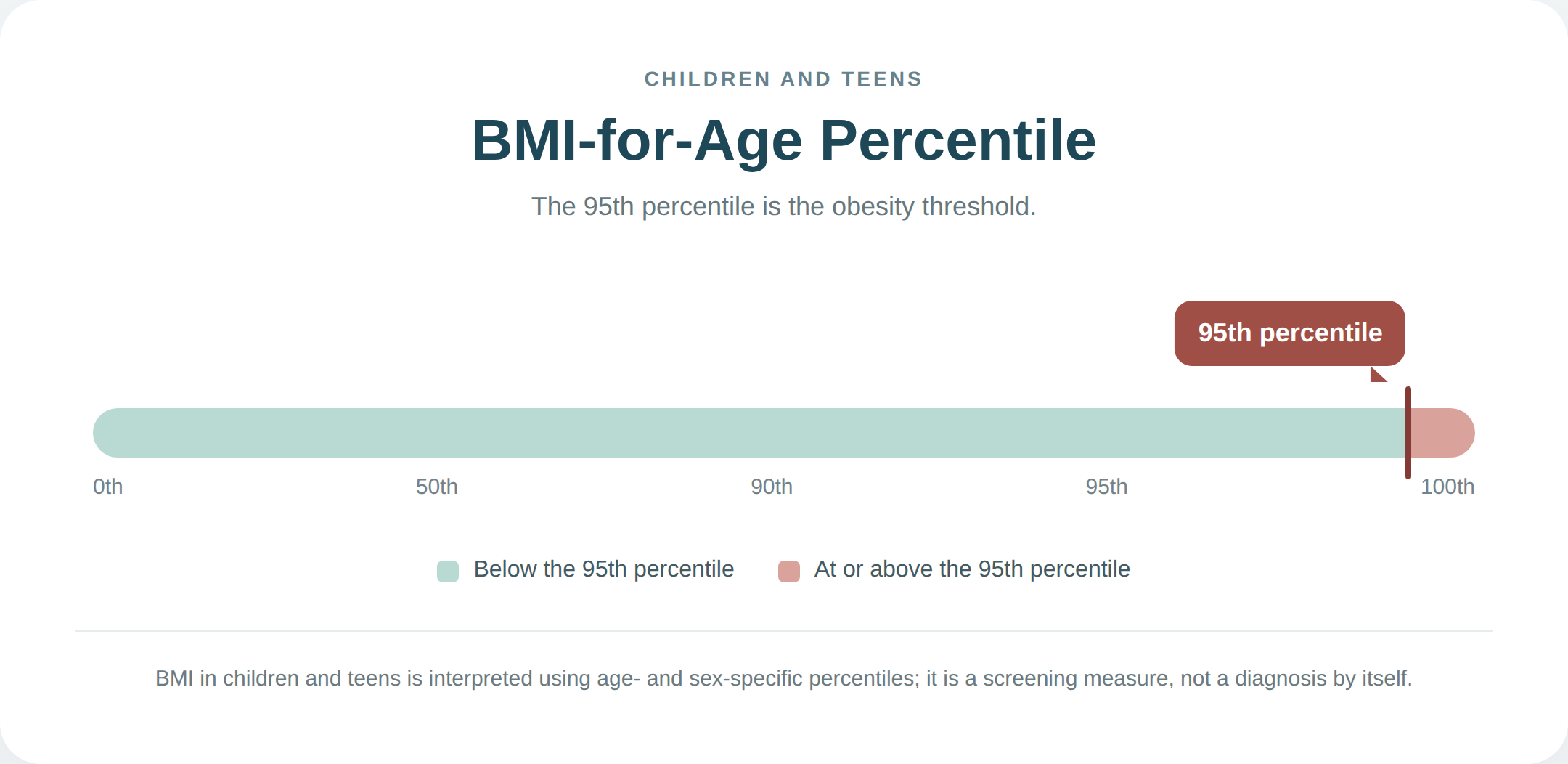
BMI is a number based on height and weight. For children, doctors compare it with other kids of the same age and sex. The CDC defines obesity in children as a BMI at or above the 95th percentile.
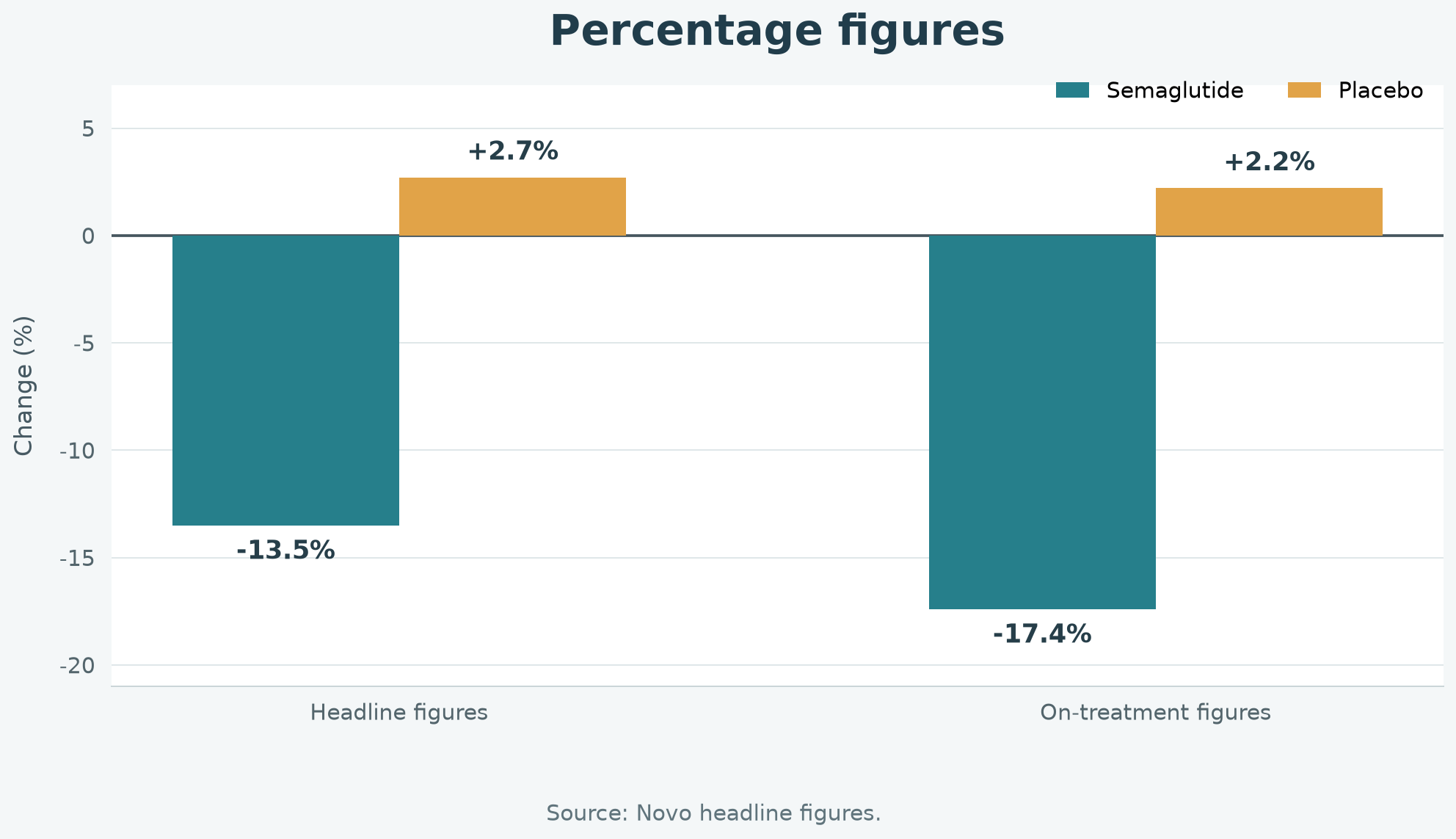
The trial’s main analysis counted every child, including those who stopped treatment. At week 68, average BMI fell 13.5 percent with semaglutide and rose 2.7 percent with placebo, the journal paper reports. Novo’s headline figures assume every child stayed on treatment. By that measure, BMI fell 17.4 percent with semaglutide and rose 2.2 percent with placebo.
Think of a child with a BMI of 30. A 13.5 percent drop would bring it to about 26. The placebo group’s BMI went up a little, which can happen as children grow.
At week 104, BMI was down 9.4 percent with semaglutide and up 8.4 percent with placebo. The gap between the groups held, but the drug group’s drop got smaller.
How does Wegovy work?
Wegovy is a once-weekly injection. Its active ingredient is semaglutide, which copies a gut hormone called GLP-1. The body releases this hormone after a meal. It signals fullness to the brain and slows how fast the stomach empties, which can reduce hunger and help people eat less.

Semaglutide is already approved for obesity in adults and in teens 12 and older. Still, not every child with extra weight needs medicine. Doctors usually start with food, activity, sleep and family support, and every child in this trial got that support too.
What were the effects on children’s health?
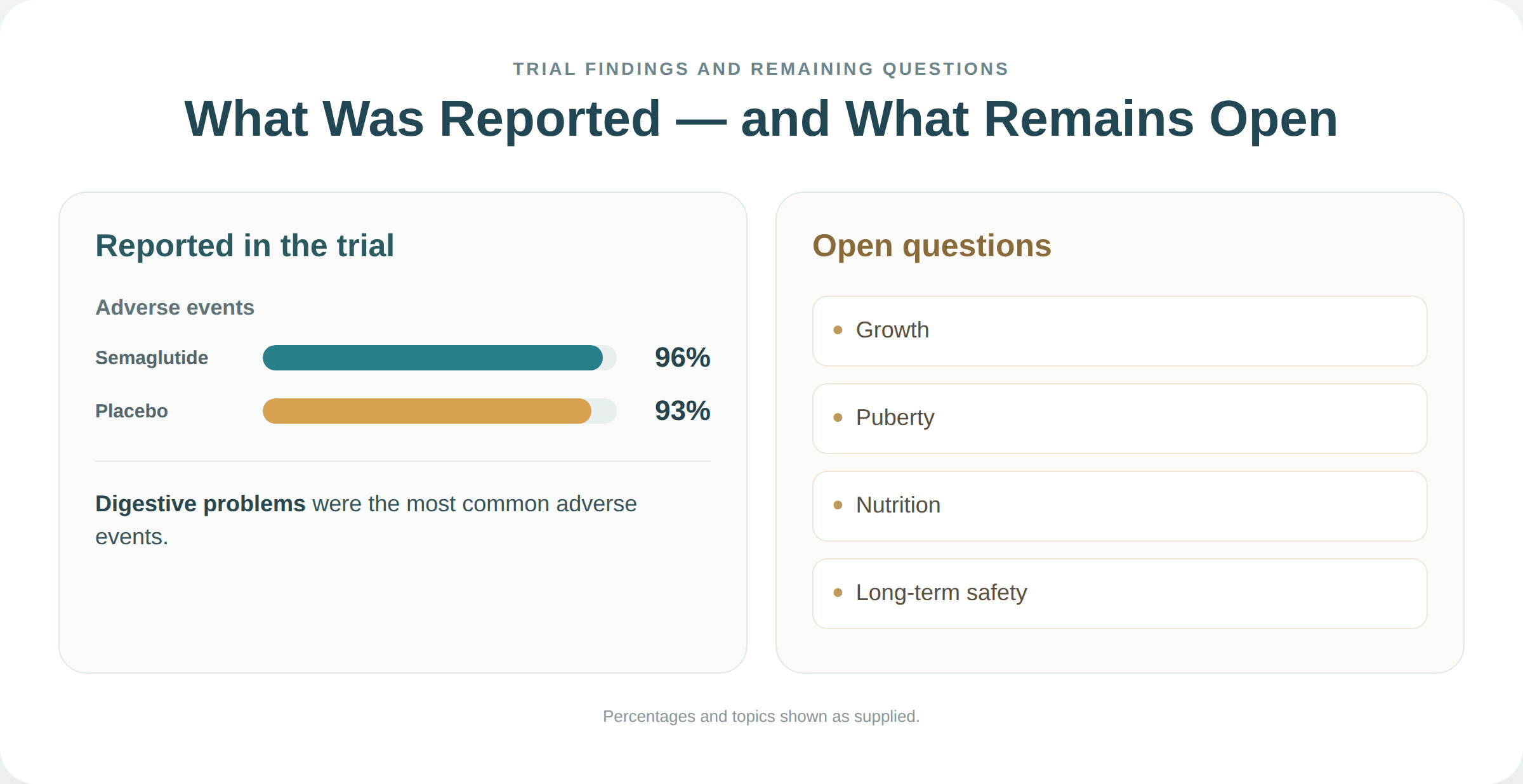
At week 68, 79 percent of children on semaglutide moved to a lower BMI category, compared with 23 percent on placebo, according to a summary of the journal paper in Contemporary Pediatrics. About 38 percent of treated children dropped below the obesity line, versus 2 percent on placebo.
Close to half the children had at least one obesity-related problem at the start, such as high blood pressure, high cholesterol or sleep apnea, CNBC reported. Childhood obesity can also be linked to a higher risk of type 2 diabetes. Lead author Ania Jastreboff said treatment came with improvements in several heart and metabolic measures.
Those health measures were secondary results, though. The trial does not show that Wegovy prevents any of these conditions.
What about Wegovy side effects in children?
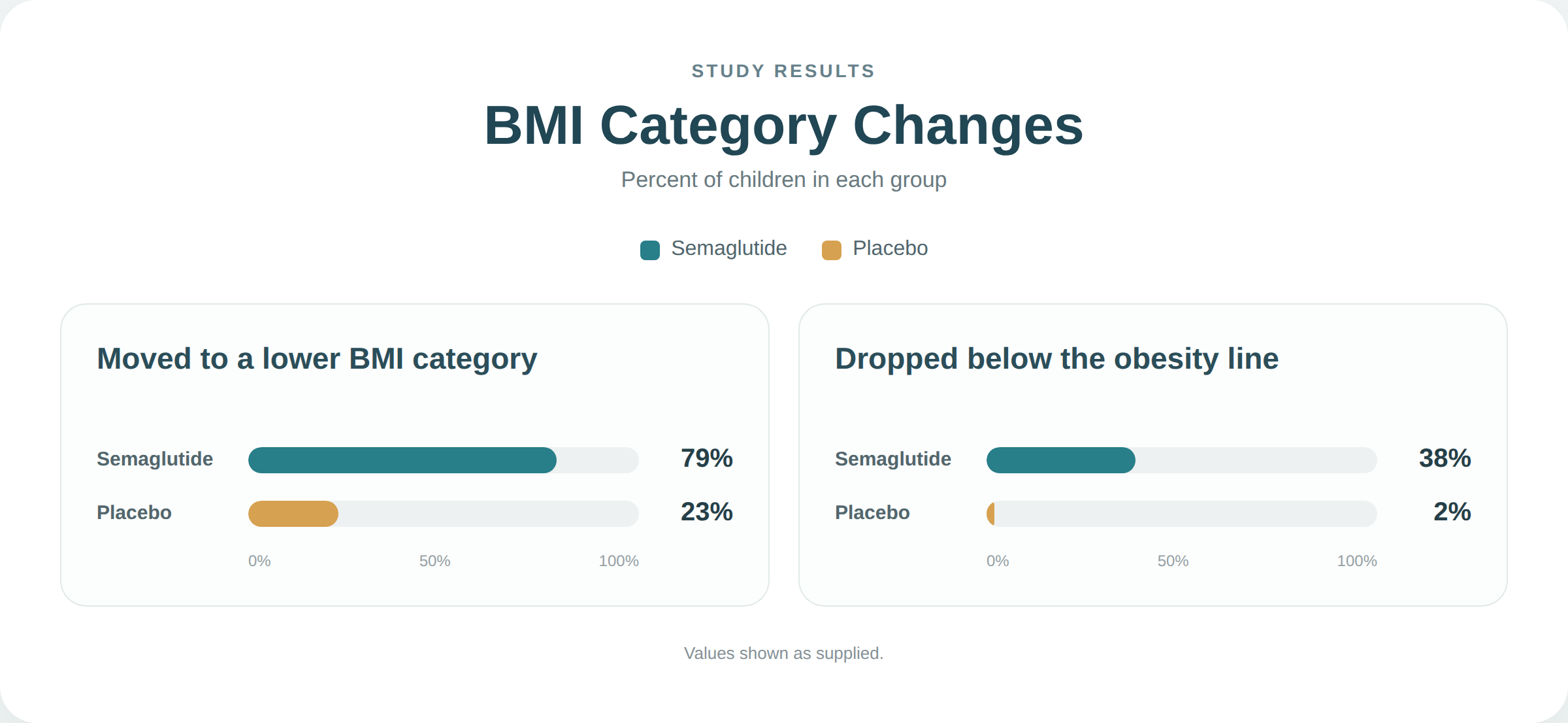
Almost everyone in both groups reported some adverse event, meaning a health problem during the trial whether or not the drug caused it: 96 percent on semaglutide and 93 percent on placebo. Stomach and digestive problems were the most common and happened more often with semaglutide. One child stopped treatment because of them.
Growth is the biggest open question. Novo says researchers found no safety concerns for growth or puberty. The New York Times, however, reported that children on semaglutide grew about 1.3 inches less than those on placebo. Some doctors also worry about nutrition gaps, muscle loss and eating disorders, the paper said.
The World Health Organization issued new child obesity guidelines on October 7, 2026. Reuters reported that they favor diet, exercise and counseling over GLP-1 drugs and do not recommend the drugs for children under 10. The safety claims above come from the company and trial authors. Independent, long-term studies in this age group do not exist yet.
Is Wegovy approved for children under 12?
Not in the United States. The FDA has approved Wegovy for ages 12 and older. Novo calls its use in younger children investigational and says there is no guarantee it will be sold for that use.
The EU also approves Wegovy for ages 12 and older. It allows a related drug, Saxenda, for some children aged 6 to 11, according to Reuters. Trial results do not make a drug approved. Regulators must review the data first, and no decision date has been announced.
Doctors can sometimes prescribe approved medicines for other uses, called off-label prescribing. Prescriptions of GLP-1 drugs for children aged 8 to 11 rose more than 300-fold from 2019 to 2026, according to a recent study reported by Forbes.
What do the results mean for parents?
This is the first trial of Wegovy in this age group, Bloomberg reported, so it adds real evidence where little existed. Even so, it is one two-year study of 167 children, run by the drug’s maker, and most children had severe obesity. The results may not apply to every child.
Treatment decisions belong with a child’s doctor, who can weigh the child’s health, growth and family situation. Healthy lifestyle habits stay the foundation of care: balanced meals for children, daily activity, enough sleep and family support. Parents should never give a child a prescription weight-loss medicine, including an adult’s pen, without medical advice.
What happens next for childhood obesity treatment?
Researchers still need to answer several questions. How do growth and puberty look over many years? What happens to weight and health when children stop the drug? How should treatment change as children become teens?
Regulators may review the STEP Young data. Novo has not announced an approval date, and none should be assumed. Independent studies would also help confirm the findings.
Frequently asked questions
What is Wegovy?
Wegovy is a once-weekly injection whose active ingredient is semaglutide. It copies a gut hormone that signals fullness. In the US it is a prescription medicine approved for weight management in adults and teens aged 12 and older, used with diet and exercise.
Can children aged 6 to 11 use Wegovy?
Not as an approved treatment in the US. Wegovy is approved only for ages 12 and up, and Novo calls its use in younger children investigational. Doctors can sometimes prescribe medicines off label, but that is a decision for a child’s doctor and family, not something to try alone.
How much did Wegovy reduce BMI in the new children’s trial?
At week 68, BMI fell an average of 13.5 percent with semaglutide and rose 2.7 percent with placebo when all children were counted. For children who stayed on treatment, the figures were a 17.4 percent drop and a 2.2 percent rise. These are group averages, not predictions for any one child.
What are the possible side effects of Wegovy in children?
In the trial, digestive problems such as nausea and vomiting were the most common side effects and were more frequent with semaglutide. Novo reported no safety concerns for growth or puberty, but the New York Times noted that treated children grew about 1.3 inches less. Longer studies are needed.
Is Wegovy approved for children under 12?
No. As of November 16, 2026, Wegovy is not approved in the US for children under 12. It is approved for ages 12 and up in the US and EU. No approval date for younger children has been announced, so check the FDA or your country’s regulator for updates.