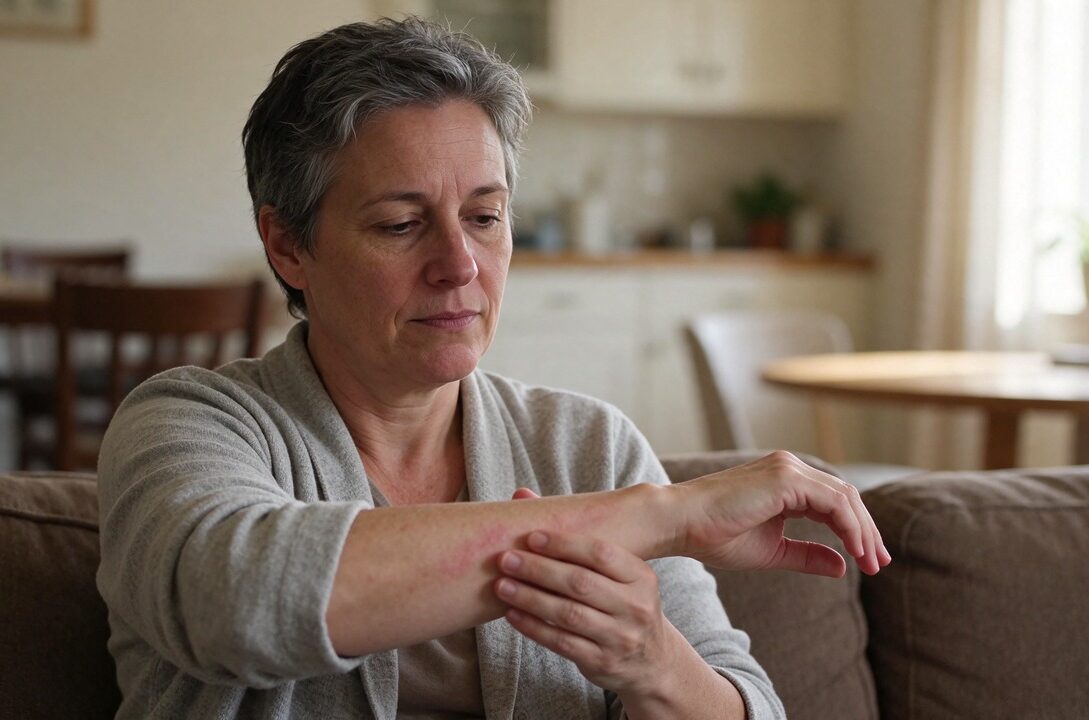
Few things are as annoying as itchy skin in winter. Cold air, low humidity, indoor heating and hot showers can all pull moisture from the skin. Winter itching can happen with or without visible dryness, so some people itch even when their skin looks normal.
Knowing the causes makes it easier to choose the right habits. This guide explains why winter itching happens, the common signs, 10 ways to prevent it and when to see a doctor. If dryness is your main concern, also read Healthy Genre‘s guide on how to prevent dry skin during winter.
Why does skin become itchy during winter?
Several winter conditions work together to dry and irritate the skin:
- Low humidity: Dry air pulls water out of the skin. According to Mayo Clinic, skin that loses water faster than it can replace it can feel rough, tight and itchy.
- Cold weather: Cold temperatures and wind dry out exposed skin, especially on the face and hands.
- Indoor heating: Central heating, space heaters and fireplaces lower the humidity inside your home.
- Hot showers: Hot water strips away natural oils. A long, hot soak makes this worse.
- Harsh soaps: Strongly scented soaps, detergents and cleaning products can irritate the skin.
- Existing skin conditions: People with eczema or psoriasis are more likely to have dry skin, Mayo Clinic says, so itching may get worse in winter.
Not all winter itching comes from dry skin. Allergies and some health conditions can also cause itching, so persistent symptoms deserve a closer look.
Common signs of itchy skin in winter
Winter skin irritation can look and feel different from person to person. Common signs include:
- Dry and rough skin.
- Frequent itching.
- Red or irritated patches.
- Flaky or peeling skin.
- Tightness after bathing.
- Small cracks in the skin.
- Burning or stinging.
Itching can affect the hands, legs, arms, back and other areas. Some people notice it only in one spot, while others feel it all over.
10 ways to prevent itchy skin in winter
1. Apply moisturizer regularly
Moisturizer reduces water loss and keeps skin soft. After bathing, apply a fragrance-free cream or ointment while your skin is still slightly damp. The American Academy of Dermatology (AAD) says creams and ointments work better than lotions.
2. Avoid long and hot showers
Hot water can remove natural oils from the skin. Take short showers of five to ten minutes in lukewarm water, and pat your skin dry instead of rubbing.
3. Use gentle and fragrance-free soaps
Harsh soaps and scented products can irritate dry skin. Choose a mild cleanser made for sensitive skin, and look for the words “fragrance-free” on the label.
4. Drink enough water
Water supports normal body functions, so drink when you are thirsty. But drinking extra water alone cannot cure itchy or dry skin. Keep moisturizing too.
5. Wear comfortable winter clothes

Soft cotton next to the skin is the gentlest choice. The AAD notes that wool or polyester worn directly on dry, sensitive skin can irritate it. Wear a cotton layer under warm, rougher fabrics.
6. Use a humidifier indoors

A humidifier adds moisture to dry indoor air. The AAD suggests one in winter for people prone to dry skin and eczema. Clean it regularly so mold does not grow.
7. Avoid scratching your skin

Scratching can damage the skin, make irritation worse and raise the risk of infection. Try a cool, damp washcloth on the itchy area for about five to ten minutes, as dermatologists recommend, and avoid sudden temperature changes.
8. Protect your skin from cold wind
Wear gloves, a scarf and warm clothing outdoors. Covering exposed skin shields it from cold, dry air.
9. Choose skin-friendly skincare products
Look for simple products with ingredients such as glycerin, petrolatum, ceramides or hyaluronic acid. Fragrance-free creams and ointments may help protect dry skin. Cleveland Clinic notes that retinol and other anti-aging ingredients may be too drying for daily use in cold weather.
10. Follow a simple winter skincare routine
In the morning, cleanse gently, moisturize and use a broad-spectrum sunscreen of SPF 30 or higher when you go outdoors. In the evening, cleanse gently and moisturize again. Keep the routine short and simple.
Foods that support healthy skin during winter
No food can cure itchy skin, but a balanced diet supports overall health and normal skin function. Good choices include:
- Fruits such as oranges, berries and papaya.
- Vegetables such as carrots, spinach and sweet potatoes.
- Nuts and seeds.
- Fish and other sources of healthy fats.
- Foods that contain vitamins A, C and E.
For family-friendly ideas, see Healthy Genre’s guide to winter nutrition for kids and its tips on building healthy habits.
When should you see a doctor for itchy skin?
Most winter itching improves with simple skin care. See a healthcare professional if you notice:
- Severe or constant itching.
- Itching that affects your sleep.
- Deep cracks or bleeding skin.
- Redness, swelling, warmth or pus.
- A spreading rash.
- Itching that does not improve with regular skin care.
- Itching with no obvious rash that lasts a long time.
Eczema, psoriasis and allergies can cause itching. So can some internal health conditions, such as kidney disease, the AAD says. A qualified healthcare professional can find the cause, so do not try to diagnose it at home. Ask before using anti-itch creams too, because some can irritate dry skin. This article is general information, not personal medical advice.
Frequently asked questions
Why does my skin become itchy during winter?
Cold air, low humidity and indoor heating dry out the skin. Hot showers and harsh soaps remove natural oils too. Dry skin feels tight and itchy. Eczema, allergies and other conditions can also cause itching, so not every case comes from dryness.
How can I stop itchy skin in winter naturally?
Take short, lukewarm showers, moisturize right after bathing, and wear soft cotton. A cool, damp washcloth can ease an itchy spot, and a clean humidifier adds moisture to the air. If itching stays severe, see a healthcare professional.
Does hot water make winter itching worse?
Yes, it can. Hot water strips natural oils from the skin, which makes dryness and itching worse. Dermatologists suggest showers or baths of five to ten minutes in warm or lukewarm water, followed by moisturizer on damp skin.
Which moisturizer is best for itchy skin during winter?
The AAD recommends fragrance-free creams or ointments, which add more moisture than lotions. Ingredients such as glycerin, petrolatum and hyaluronic acid are common. Skin differs from person to person, so ask a dermatologist if one product does not work.
When should I worry about itchy skin in winter?
Get medical advice if itching is severe, keeps you awake, spreads, or does not improve with regular skin care. Also seek help for deep cracks, bleeding, or signs of infection such as swelling, warmth or pus.
Conclusion
Cold air, low humidity, indoor heat, hot showers and harsh products can all lead to itchy skin in winter. A few steady habits help: moisturize regularly, keep showers short and lukewarm, choose gentle products and cover exposed skin.
If itching becomes severe or does not improve, talk to a healthcare professional or dermatologist.