
Your nose is blocked, your throat feels scratchy and you are more tired than usual. Is it a cold or the flu? Many people ask this every season, because cold vs flu symptoms can look very similar in the first day or two.
The good news is that there are clear clues. Both are respiratory illnesses caused by viruses, but the flu usually starts faster, feels heavier and carries a higher risk of complications. Knowing which one you are likely dealing with helps you decide how much rest you need, when to stay home and when to call a doctor.
This guide compares the two side by side, explains how long each lasts, how contagious they are and when medical help is a good idea.
Medical disclaimer: This article is for general education only. It does not diagnose any condition or replace advice from a doctor. If you are worried about your symptoms, talk to a healthcare professional. In an emergency, call your local emergency number.
What Is the Difference Between a Cold and the Flu?
A cold and the flu are both contagious respiratory illnesses, but they are caused by different viruses. The common cold can be caused by many viruses. The flu (influenza) is caused by influenza viruses. CDC – Common Cold
The US Centers for Disease Control and Prevention (CDC) explains that flu can cause mild to severe illness and usually comes on suddenly. A cold is generally milder and tends to build up gradually. That difference in speed and strength is the first big clue.
Cold vs Flu Symptoms: Side-by-Side Comparison

The table below follows the comparison published by the CDC. Remember that it describes what is typical. Real illnesses vary from person to person.
| Symptom | Common cold | Flu |
| How it starts | Gradual | Abrupt, often sudden |
| Fever | Rare | Usual, often lasts 3-4 days |
| Body aches | Slight | Usual, often severe |
| Chills | Uncommon | Fairly common |
| Tiredness | Mild | Can be extreme |
| Headache | Rare | Common |
| Stuffy nose | Common | Sometimes |
| Sneezing | Common | Sometimes |
| Sore throat | Common | Sometimes |
| Chest discomfort and cough | Mild to moderate, hacking cough | Common, can be severe |
Symptoms of a Cold
A cold usually begins with a sore or scratchy throat, then a runny or stuffy nose and sneezing. You may have a mild cough and feel a little tired, but you can often keep going with your day. A high fever and strong body aches are not typical.
Symptoms of the Flu
The CDC lists fever or feeling feverish, chills, cough, sore throat, a runny or stuffy nose and muscle or body aches. Headache and tiredness are also common. Some people, more often children than adults, may have vomiting or diarrhea.
Important: not everyone with the flu has a fever, so a normal temperature does not rule it out.
Head Cold vs Flu
People often say “head cold” for a cold that mostly affects the nose and sinuses: blocked nose, pressure in the face, sneezing and a runny nose. A head cold usually does not bring strong body aches or a high fever. If you feel achy, feverish and wiped out, the flu becomes more likely.
Fever vs Cold vs Flu
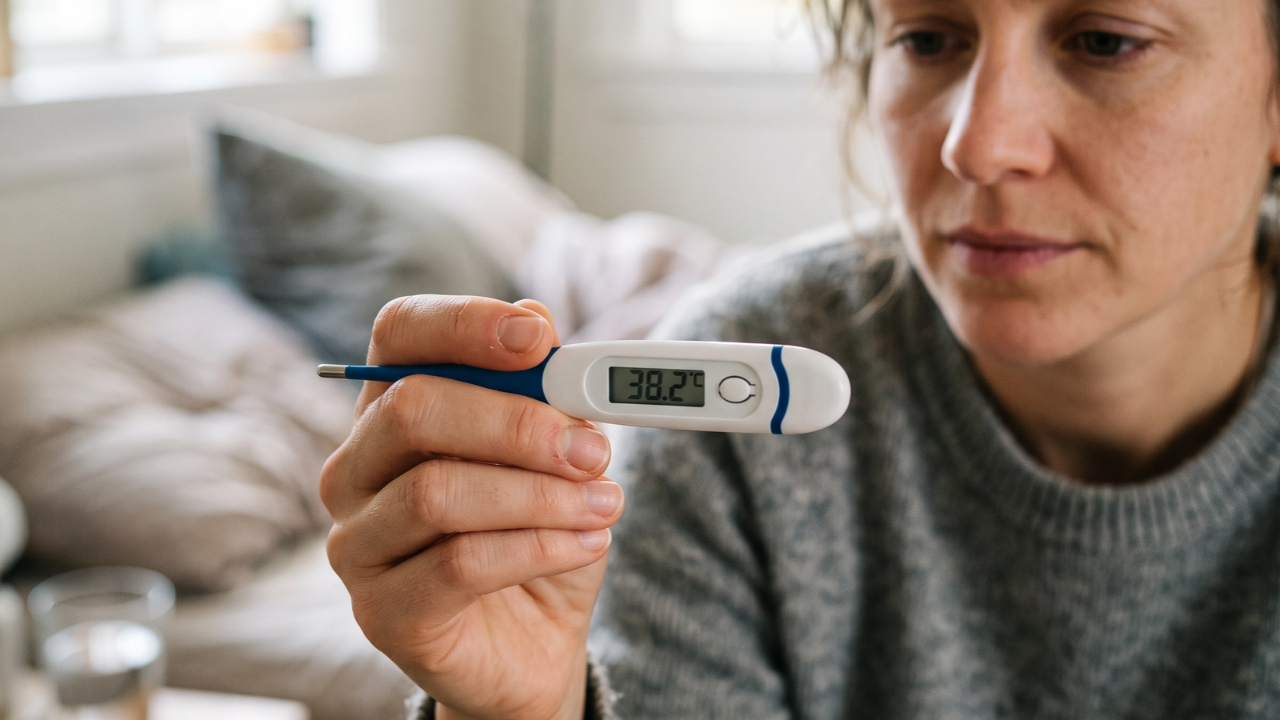
Fever is one of the most useful clues. It is rare with a cold and usual with the flu. Still, treat it as a clue, not proof. A doctor or a test gives a more certain answer.
How to Tell Cold vs Flu: Four Quick Clues
If you are trying to work out how to tell cold vs flu at home, ask yourself:
- How fast did it start? Sudden and strong points to flu. Slow and mild points to a cold.
- Do you have a fever or chills? More likely flu.
- Are your muscles aching? Strong aches suggest flu.
- Is your nose the main problem? A stuffy, runny nose and sneezing point more to a cold.
The CDC is clear that it is hard to be sure from symptoms alone, because many respiratory illnesses overlap. If knowing matters, for example because you are at higher risk, ask a doctor about testing.
Cold vs Flu vs COVID, RSV, Allergies and Sinus Infection
Several other conditions can look like a cold or the flu. Here is how they compare in simple terms.
Cold vs flu vs COVID-19. The CDC states that you cannot tell the difference between flu and COVID-19 by symptoms alone, because some symptoms are the same. Some tests can check for both at the same time. If you have symptoms, talk to a healthcare provider about testing.
Cold vs flu vs RSV. RSV is another common respiratory virus. In healthy adults it often feels like a cold. It can be more serious in babies and older adults. CDC – RSV Symptoms
Cold vs flu vs allergies. Allergies usually cause itchy eyes, sneezing and a runny nose without fever or body aches, and they can last as long as you are exposed to the trigger. Mayo Clinic – Cold or Allergy
Cold vs flu vs sinus infection. A sinus infection often brings facial pain or pressure and thick nasal discharge, and it may follow a cold that does not improve. MedlinePlus – Sinusitis
Because these overlap, a doctor is the right person to sort them out when symptoms are strong or last long.
Is Flu vs Cold Contagious?

Yes, both spread from person to person, mainly through droplets when someone coughs, sneezes or talks, and through touching contaminated surfaces and then your face.
An older CDC page notes that healthy adults with flu may be able to infect others from about one day before symptoms start to up to five days after becoming sick. CDC – How Flu Spreads This means you can pass it on before you know you are ill.
Simple steps help for both illnesses:
- Wash your hands often with soap and water.
- Cover coughs and sneezes.
- Stay home when you are sick.
- Avoid close contact with people at higher risk.
- Ask your doctor about the yearly flu vaccine. It protects against flu, not against the common cold. CDC – Benefits of the Flu Vaccine
How Long Does a Cold Last vs Flu?
Flu. According to the CDC’s clinical information, flu symptoms usually go away within about 3 to 7 days for most people. Cough and tiredness can last more than two weeks, especially in older adults and people with chronic lung disease.
Cold. A cold is usually shorter and milder, often improving over about a week to ten days. Mayo Clinic – Common Cold: Symptoms and Causes
If you are getting worse instead of better, or symptoms last much longer than expected, see a doctor.
Complications: Why the Flu Needs More Care
The CDC explains that flu can cause moderate complications, such as sinus and ear infections, and serious ones such as pneumonia. It can also make long-term conditions like asthma or heart disease worse.
Some people are more likely to have serious flu complications: adults aged 65 and older, young children, pregnant women and people with certain chronic medical conditions. If you are in one of these groups, contact a healthcare provider early when flu symptoms start. A doctor can tell you whether treatment is suitable. CDC – Treating Flu with Antiviral Drugs
When to See a Doctor for a Cold vs Flu

Most colds and many cases of flu can be managed at home with rest and fluids. Book a doctor’s visit if:
- You are in a higher-risk group and have flu symptoms.
- Symptoms last longer than expected or keep getting worse.
- You feel better, then get worse again.
- You are unsure whether it is a cold, flu, COVID-19 or something else.
Get emergency medical help right away if an adult has (CDC):
- Difficulty breathing or shortness of breath
- Pain or pressure in the chest or abdomen
- Sudden dizziness
- Confusion
- Severe or persistent vomiting
- Flu-like symptoms that improve but then return with fever and a worse cough
For an infant, get help right away if the baby cannot eat, has trouble breathing, has no tears when crying, or has far fewer wet diapers than normal.
Looking After Yourself at Home
For mild illness, rest, enough fluids and staying home are the basics. Ask a doctor or pharmacist before using any medicine, especially if you take other medicines, are pregnant or have a long-term condition. Do not give medicines to children without proper advice.
To build good habits for the whole season, see our guide to boost immune system. For a wider overview of everyday conditions, visit our guide to common health problems.
Frequently Asked Questions
How to tell cold vs flu?
Look at speed and strength. The flu usually starts suddenly with fever, chills, body aches and strong tiredness. A cold builds slowly and is mostly a stuffy or runny nose, sneezing and sore throat. Only a doctor or test can confirm it.
How do I know if I have the flu vs a cold?
A fever, severe body aches, chills and sudden onset point toward flu. Mild symptoms centered on the nose and throat point toward a cold. Not everyone with the flu has a fever, so testing can help when you are unsure.
What are flu symptoms vs cold symptoms?
Flu symptoms often include fever, chills, cough, sore throat, runny or stuffy nose, muscle aches, headache and tiredness. Cold symptoms are usually milder and focused on a runny or stuffy nose, sneezing and sore throat.
Is flu vs cold contagious?
Both are contagious. Flu can spread from about a day before symptoms start and for several days after. Washing hands, covering coughs and staying home when sick help limit spread.
How long does flu last vs cold?
Flu usually improves within about 3 to 7 days, though cough and tiredness can last longer. A cold is often shorter and milder, roughly a week to ten days. See a doctor if you are not improving.
When to see a doctor for a cold vs flu?
See a doctor if you are at higher risk, symptoms are severe or last longer than expected, or you get worse after improving. Seek emergency help for trouble breathing, chest pain, confusion or severe vomiting.
What is the flu vs cold in simple words?
Both are viral infections of the nose, throat and lungs. The flu is usually stronger, starts faster and has a higher chance of complications. A cold is usually milder.
Conclusion
The main answer to the cold vs flu question comes down to speed and severity. A cold creeps in, stays mild and mostly affects your nose and throat. The flu arrives suddenly and often brings fever, aches and deep tiredness.
Symptoms alone cannot always settle it, and other illnesses such as COVID-19 can look the same. If you are in a higher-risk group, feel very unwell or notice any warning signs, contact a healthcare professional rather than waiting. This article gives general information only and is not a substitute for medical advice.