
The vitamin K shot for newborns is given to most babies in the US soon after birth. More parents are now declining it, and two new studies have brought fresh attention to this trend. The concern isn’t infection. It’s bleeding, which can happen when a baby doesn’t get enough vitamin K.
If you’re wondering what’s in the shot, whether your baby needs it, or how it differs from a vaccine, those are fair questions. Doctors recommend it because it protects against a rare condition that can be severe.
Why Do Newborns Need Vitamin K?
Vitamin K helps the body make the proteins needed for blood clotting. Without enough of it, a baby can bleed longer than expected, sometimes without any obvious injury.
Newborns start out with very little vitamin K. Very little crosses the placenta, breast milk contains only a small amount, and a baby’s gut hasn’t yet developed the bacteria that produce some of it. None of this means a parent did something wrong. It’s how early life works.
The American Academy of Pediatrics recommends a vitamin K injection for all newborns, whether they are breastfed or formula-fed. It is given into the thigh muscle shortly after birth and provides a dependable supply while their own stores are low.
Why Are Some Parents Declining the Vitamin K Shot for Newborns?
Families have different reasons. Some worry about ingredients or side effects. Some want fewer procedures right after delivery or would prefer an oral version. Others have come across online posts that make the shot sound dangerous. The shot is also given around the same time as other newborn care, which may include vaccines.
Years ago, a possible link between the shot and childhood cancer was suggested, but later research did not support it. If you’re unsure, ask your baby’s clinician to explain the evidence, the ingredients, and what could happen if you delay or skip it. Social media posts can’t account for your child’s health the way a clinician can.
What Is Vitamin K Deficiency Bleeding (VKDB)?
Vitamin K deficiency bleeding, or VKDB, happens when a baby lacks the vitamin K needed for normal blood clotting. It can occur in the first hours or days of life, or weeks later. Late-onset VKDB is especially concerning because a baby can seem perfectly healthy until bleeding starts.
Signs include unusual bruising, blood in the stool or vomit, and bleeding from the nose or umbilical stump. Sometimes the bleeding is internal, in the digestive tract or brain. Bleeding in the brain can cause seizures, permanent damage, or death. Serious bleeding can also happen without any visible warning.
What Do the New Studies Reveal About the Vitamin K Shot for Newborns?
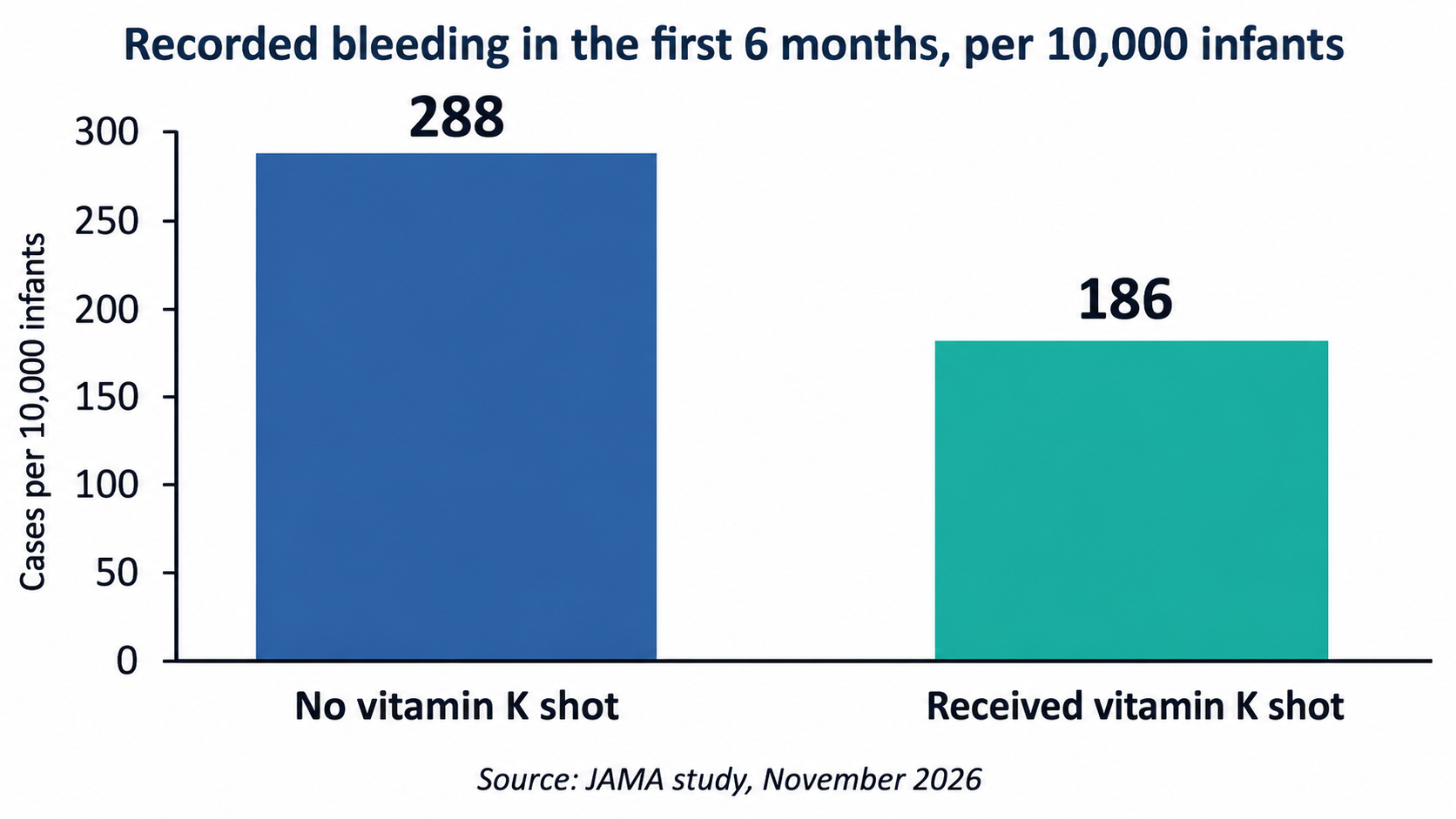
Two US studies were published online on November 5, 2026, one in JAMA and one in JAMA Pediatrics. Both examined health records from 2017 through 2025, using different datasets and measuring different outcomes.
The JAMA study included about 5.2 million infants. The share who did not receive the shot rose from 3.1% in 2017 to 6.8% in 2025. During the first six months of life, babies who did not receive vitamin K had more recorded bleeding: 288 cases per 10,000 infants, compared with 186 among babies who received it. After adjusting for other factors, the risk was 47% higher. The adjusted risk of bleeding inside the skull was more than double.
The JAMA Pediatrics study included about 11 million infants. The share of newborns receiving the injection dropped from 97.7% to 95.0% over the same period, while the recorded rate of VKDB rose by roughly 347%. This figure reflects trends in health records and does not prove that every bleeding case was caused by a missed shot. Both studies, however, point to a higher risk of bleeding among infants who do not receive vitamin K.
Is the Vitamin K Shot a Vaccine?
No. A vaccine teaches the immune system to recognize a germ. The vitamin K shot supplies a nutrient the body needs for normal blood clotting. It does not prevent an infection.
What Should You Ask Your Baby’s Doctor?
If you’re hesitant, tell your pediatrician or midwife what’s bothering you. Ask how the shot prevents VKDB, what side effects are known, and whether an oral schedule is recommended where you live. Some countries use oral vitamin K schedules, but they require multiple doses and may not protect as reliably as an injection. In the US, the CDC does not recommend oral vitamin K as a substitute because it may not be absorbed consistently. Don’t replace the recommended injection with drops or supplements unless your baby’s clinician provides a specific plan.
This is a decision to discuss with a qualified professional who can answer your questions without pressure. The key point is that newborns have low vitamin K levels, and the vitamin K shot for newborns is recommended because the bleeding it helps prevent is difficult to predict and can be life-threatening.
Frequently Asked Questions
Why do newborns need a vitamin K shot?
Babies are born with low vitamin K stores. The injection helps their blood clot normally and lowers the risk of VKDB.
Can breastfeeding provide enough vitamin K?
No. Breast milk contains only a small amount of vitamin K, so breastfeeding alone does not prevent VKDB.
Is the vitamin K shot a vaccine?
No. It provides vitamin K for blood clotting. A vaccine prepares the immune system to fight a particular infection.
Can parents choose oral vitamin K instead?
Some countries use oral vitamin K schedules, but they require multiple doses and may be less reliable than an injection. In the US, the CDC recommends the injection. Ask your baby’s clinician about the guidance where you live.