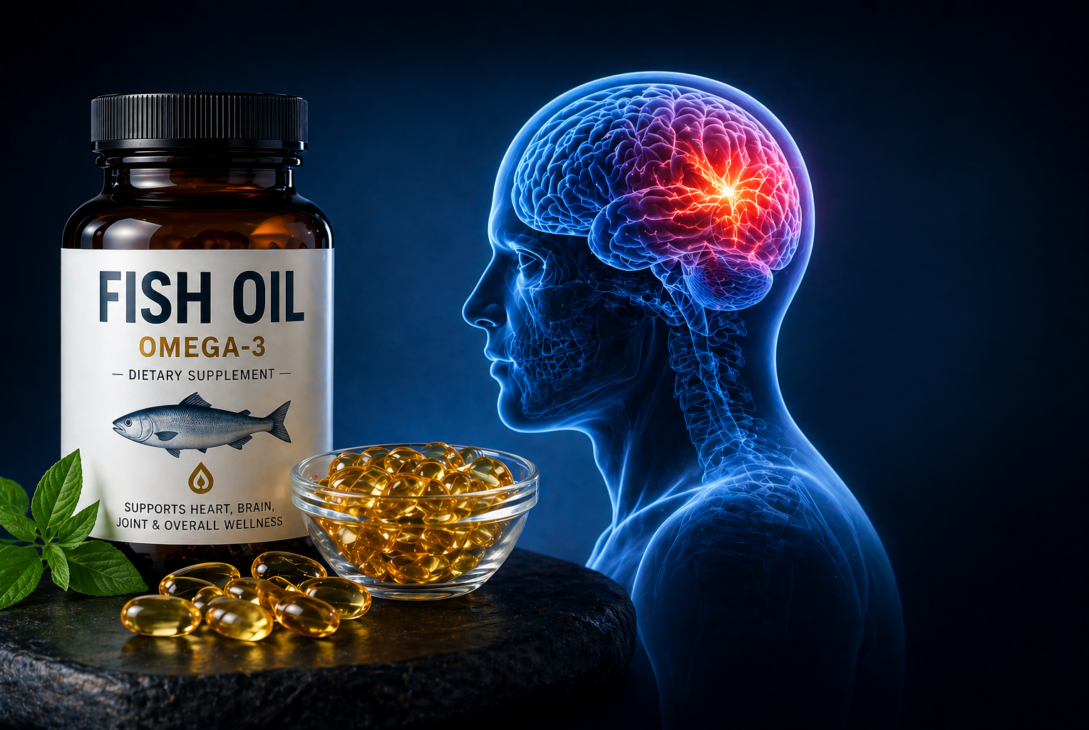
Most people don’t think twice before popping a fish oil capsule in the morning. It has been sold as a miracle supplement for decades — touted as beneficial for your heart, joints, and brain. Walk into any pharmacy, and you will find dozens of brands lining the shelves. But here’s the thing nobody is really talking about yet: if you have ever suffered head injuries, even mild ones, fish oil might not be doing your brain the favor you think it is.
That’s the core finding of a new study published in the journal Cell Reports in 2026. Researchers at the Medical University of South Carolina found that a specific ingredient in fish oil could slow down the process by which the brain heals itself after an injury. Don’t speed it up — slow it down. For people who play contact sports, have been in car accidents, or work in high-risk physical environments, that finding deserves some serious attention.
Fish Oil Supplements: Not One Thing, But Two Very Different Things
DHA is the one your brain loves. It is woven directly into brain cell membranes and has been studied for years as a compound that helps with memory, focus, and long-term cognitive health. DHA is the reason fish oil got its good reputation in the first place. EPA is another one. And this is where the new research gets complicated.
The MUSC study, led by neuroscientist Dr. Onder Albayram, found that in mice with repeated mild head trauma, EPA did not help with brain repair — it got in the way. Mice fed EPA-heavy diets after their injuries scored worse on memory and learning tasks. They were not recovering the way they should have been.
What Happens to Your Blood-Brain Barrier After a Hit to the Head
The tiny blood vessels that make up this barrier are not just passive walls. They are active. After a head injury, they carry repair signals, deliver nutrients, and help flush out waste. The whole process of how the brain heals itself depends heavily on these vessels being strong and working properly.
What the MUSC researchers found was that EPA was making those vessel walls weaker. It was destabilizing them at exactly the moment the brain needed them most. On top of that, EPA appeared to block the chemical repair signals the brain sends out after trauma — essentially jamming the communication lines the brain uses to start fixing itself.
Why Healthier Foods Beat Supplements Every Single Time
Here is where it gets practical. The problem identified in the study is not omega-3 fatty acids as a whole — it is concentrated EPA in supplement form. Look, there is a reason nutritionists keep telling people to eat their food rather than replace it with pills.
When you sit down to eat a piece of salmon or crack open a few walnuts, your body is not getting hit with a concentrated blast of a single compound. It gets everything together — DHA, EPA, vitamin D, selenium, B vitamins, a little of this and a little of that — the way nature packaged it.
Your body knows what to do with food. It has been doing it for thousands of years. A pill does not work that way. Swallow a capsule and your body gets slammed with one fatty acid at a concentration no plate of food would ever come close to hitting. The gap between a supplement and an actual meal is bigger than the label on the bottle will ever tell you.
People gloss over it because the marketing sounds the same — omega-3s are omega-3s, right? Not really. Not when it comes to how much lands in your bloodstream at once and what your body is supposed to do with all of it.
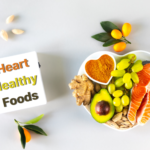
So, where should you be getting this stuff? Start with fish. Real fish, cooked and eaten. Eating salmon twice a week is not a hard habit to build, and your brain will notice the difference over time. Sardines are underrated — toss them on toast with a little lemon and you have got a meal that costs almost nothing and delivers more than the most expensive supplements promise. Mackerel is worth trying if you have not already. As for walnuts, keep a small bowl of them somewhere visible in your kitchen. Not hidden in a cabinet.
Visible. Because when they are in front of you, you eat them, and they are one of the very few plant foods that hand you DHA without anything being extracted, isolated, or processed out of it first.
The Brain Benefits of Fish Oil Are Real — But Context Matters
To be clear, Dr. Albayram did not come out of this study saying fish oil is poison. His exact words were direct: “I am not saying fish oil is good or bad in some universal way. What our data highlight is that biology is context-dependent.”
For anyone who has never taken a serious blow to the head, fish oil for heart health and general wellness still has a solid body of research behind it. The cardiovascular brain benefits of omega-3s have been documented in dozens of studies over many years. DHA, specifically, continues to be associated with better memory and a lower risk of age-related cognitive decline.
The issue is not fish oil across the board. The issue is taking high-dose EPA supplements when your brain is in — or has recently been in — a state of repair. That is the situation where the new research says caution is warranted.
A Smarter Way to Think About Supplements and Head Injuries
Science rarely hands you a clean yes or no. This story is no different. The same supplement sitting in millions of medicine cabinets right now may be totally fine for one person and quietly problematic for another. That is not a reason to be afraid — it is a reason to pay attention.
The MUSC team is continuing its research. They plan to look at how EPA and DHA interact with different types of brain cells and different regions of the brain, with human clinical trials potentially on the way. The full picture is still being drawn.
Until then, eat real food when you can. Be specific about what is in any supplement you take. And if you have a history of head injuries — no matter how mild they seemed at the time — make sure your doctor knows before you keep reaching for that bottle on the shelf.