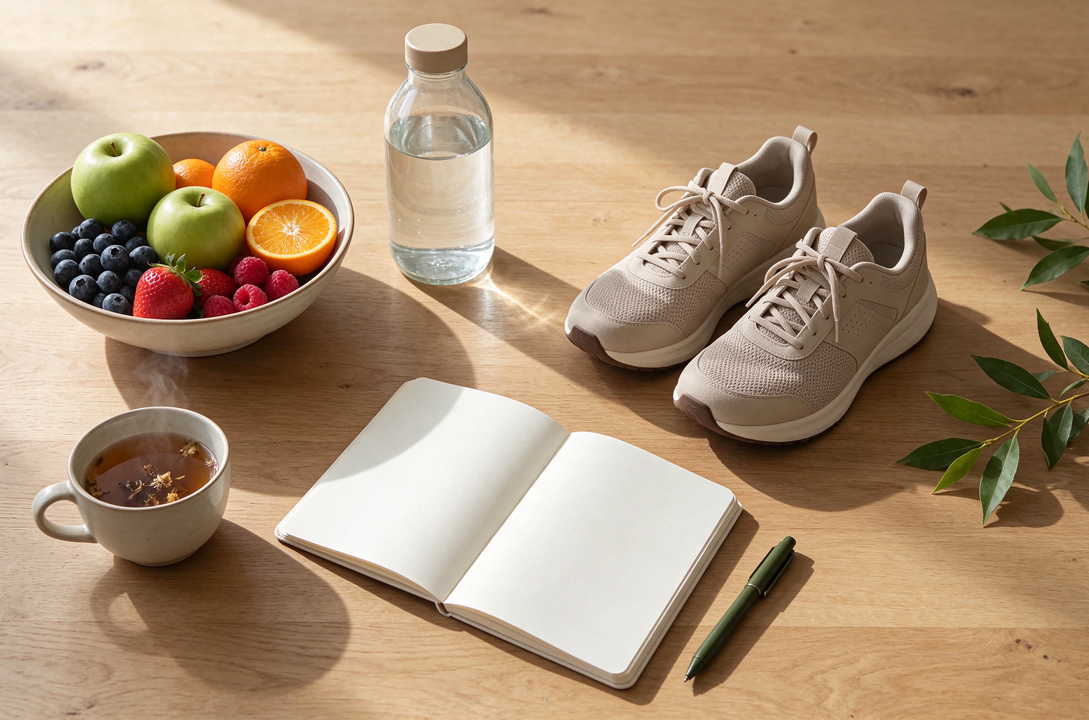
Healthy habits are small, repeated actions, like eating a vegetable at lunch or walking after dinner, that protect your body and mind over time. You do not need a big life overhaul to start them.
The hard part is not knowing what to do. It is doing it consistently when life gets busy. This guide explains what healthy habits are, gives you seven to start with, and shows how to make them stick.
Pick one habit, start small, and build from there. For the full picture, see our guide to healthy lifestyle habits.
What Are Healthy Habits?
Healthy habits are behaviors that support your physical and mental health and that you repeat often enough to feel automatic. Researchers describe a habit as a behavior triggered by a cue in your environment rather than by conscious effort.
Why Are Healthy Habits Important?
Small daily choices add up. The CDC’s chronic disease prevention tips note that people with healthy eating patterns live longer and have a lower risk of obesity, heart disease, type 2 diabetes and certain cancers. The WHO’s healthy diet fact sheet says a healthy diet protects against noncommunicable diseases such as diabetes, heart disease, stroke and cancer. The CDC also calls physical activity one of the most important things you can do for your health.
Habits save effort too. Once a behavior is automatic, it takes less willpower to keep going.
7 Healthy Habits to Start With
You do not need all seven at once. Choose the one that feels easiest and begin there.
1. Eat More Whole, Minimally Processed Foods

Healthy eating habits start with what is on your plate. The WHO’s healthy diet fact sheet describes a healthy diet as one built around vegetables, fruit, legumes, nuts and whole grains, with at least 400 g (about five portions) of fruit and vegetables a day.
To start, add one vegetable to your biggest meal and swap one sugary snack for fresh fruit. The WHO also advises keeping salt under 5 g a day and free sugars under 10% of energy intake.
2. Drink Water Through the Day
Hydration is one of the easiest habits to begin. Needs vary with climate, activity level and health, so there is no single number that fits everyone.
Keep a bottle within reach, have a glass with meals, and drink when you are thirsty. If you have a kidney or heart condition, ask your doctor how much fluid is right for you.
3. Move Every Day

The CDC’s adult activity guidelines say adults need at least 150 minutes of moderate-intensity activity a week, such as brisk walking, plus muscle-strengthening activity on 2 or more days. That is about 30 minutes, 5 days a week.
Short bouts count, so a 10-minute walk after each meal is a good start. For a gentler option, try building a yoga habit.
4. Sit Less
The CDC advises adults to move more and sit less across the day. Stand up and stretch every 30 to 60 minutes, or take phone calls on foot.
5. Protect Your Sleep

The CDC’s adult sleep statistics say adults should get at least 7 hours of sleep a day. Adults who sleep fewer than 7 hours are more likely to report health problems, including heart attack and depression, according to the CDC’s page on sleep and heart health.
To adopt healthy sleep habits, keep a regular bed and wake time, keep your bedroom cool, dark and quiet, limit caffeine late in the day, and put screens away before bed. If your schedule is off, move bedtime 15 minutes earlier and build from there.
6. Look After Your Mental Health
Healthy habits for mental health can be simple. The National Institute of Mental Health (NIMH) lists these ways to cope with stress: exercise and eat healthy, get regular sleep, avoid excess caffeine, keep a journal, try relaxation exercises, challenge unhelpful thoughts, and reach out to friends and family.
Pick one. If stress or anxiety will not go away or interferes with daily life, NIMH advises talking to a health professional.
7. Build Heart Healthy Habits
Heart healthy habits overlap with everything above: eating well, moving and sleeping enough. Tobacco and alcohol matter too. The CDC says quitting smoking lowers your risk of heart disease, lung disease and cancer. For alcohol, the CDC’s guidance on moderate alcohol use says drinking less is better than drinking more, and people who do not drink should not start.
Need food ideas? See our list of top 25 heart-healthy foods.
Healthy Habits for College Students
Irregular schedules and tight budgets make healthy habits harder. A few simple rules help:
- Keep a regular sleep and wake time, even during exams
- Stock cheap staples like oats, eggs, lentils and fruit
- Walk between classes and take short movement breaks while studying
- Go easy on energy drinks and caffeine, and limit alcohol
How to Build Healthy Habits That Stick
Knowing how to build healthy habits is mostly about making them small and repeatable. Here is how to create healthy habits that last beyond the first week.
Start Small
Big goals depend on motivation, which comes and goes. Shrink the habit until it feels almost too easy.
- Instead of “eat perfectly,” try “add one vegetable to dinner”
- Instead of “work out for an hour,” try “walk for five minutes”
This is also how to start healthy eating habits that are sustainable: make small swaps you can keep on a busy day, not strict rules you drop by week two.
Attach It to Something You Already Do

Habit stacking means linking a new habit to an existing one. Use this formula: After I [current habit], I will [new habit].
For example, after you pour your morning tea, drink a glass of water. After you brush your teeth, stretch for two minutes.
Make the Healthy Choice Easy
Change your surroundings. Keep fruit on the counter, put your water bottle where you can see it, lay out workout clothes the night before, and charge your phone outside the bedroom.
Track Lightly
Tick a box on a calendar or use a notes app. If tracking becomes stressful, check in once a week instead.
Be Patient With the Timeline
In a well-known habit study, the average time for a new behavior to become automatic was 66 days. Individual results ranged from 18 to 254 days, according to UCL’s summary of the research. If a habit is not automatic after three weeks, that is normal.
Recover After a Slip
To stick to healthy habits long-term, expect to miss days. UCL News reports that the study’s lead author explained that missing one opportunity did not significantly affect habit formation, but people who were very inconsistent did not succeed in forming habits. So if you miss one day, get back on track the next.
Healthy Habits at a Glance
| Habit | Easy first step | Benchmark | Source |
| Eating | Add one vegetable to your biggest meal | 400 g fruit and vegetables a day; under 5 g salt | WHO |
| Hydration | Keep a bottle within reach | No single number; varies by person | n/a |
| Movement | 10-minute walk after a meal | 150 minutes moderate activity a week, plus strength work on 2 days | CDC |
| Sleep | Fixed wake-up time | At least 7 hours a day | CDC |
| Mental health | One coping habit, such as journaling | See a professional if stress will not ease | NIMH |
| Heart protection | Cut back on alcohol; get quit-smoking support | Less alcohol is better; quitting lowers disease risk | CDC on alcohol, CDC on chronic disease |
FAQs
What Are Healthy Habits?
Healthy habits are repeated daily behaviors that support your physical and mental health. Common examples include eating whole foods, staying hydrated, moving regularly, sleeping at least 7 hours, managing stress and limiting tobacco and alcohol.
Why Are Healthy Habits Important?
They lower the effort of staying healthy. Healthy eating patterns are linked with a lower risk of obesity, heart disease and type 2 diabetes, and regular activity is one of the most important things you can do for your health.
How Do I Build Healthy Habits?
Start with one small action, attach it to something you already do, make it easy, and track it lightly. Add a second habit only after the first feels automatic.
How Can I Stick to Healthy Habits Long-Term?
Be patient and expect slips. In one study the average was 66 days to automaticity, with a range of 18 to 254 days. Missing one day did not significantly affect habit formation.
How Do I Start Healthy Eating Habits?
Add one vegetable to your largest meal, swap a sugary snack for fruit, and cook at home more often. The WHO suggests at least 400 g of fruit and vegetables a day.
How Do I Adopt Healthy Sleep Habits?
Aim for at least 7 hours. Keep regular bed and wake times, make your bedroom cool, dark and quiet, limit late caffeine, and put screens away before bed.
Conclusion
Healthy habits do not have to be big or perfect. A vegetable at dinner, a short walk, a regular bedtime and one stress-relief habit already move you in the right direction.
Choose one habit this week, attach it to something you already do, and be patient when you slip. Ready for more? Explore our guide to healthy lifestyle habits.
Disclaimer: This article is for general information only. It is not medical advice, diagnosis or treatment. Talk to your doctor before changing your diet, exercise or health routine, especially if you have a medical condition, take medication or are pregnant.